

Dummy Account!
What customers say
Review highlights
Fascinating speciesUnique characteristicsEcological importanceDelicious fruitGreat for nature lovers
Do you want to save money? Use this Sign-up Page to earn a discount while collecting your Testimonials!
PH
Pandion haliaetus
The Osprey is a large, fish-eating raptor with long, narrow wings and a distinctive dark eye stripe. It’s known for its incredible hunting dives, catching fish with sharp talons directly from the water.
Ospreys have reversible outer toes that let them grasp slippery fish with two toes in front and two behind — just like an owl!
This is an example of how the Custom Cards works!
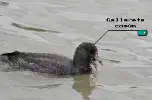
Fulica armillata
Red-gartered Coot (Fulica armillata):
The Red-gartered Coot is a medium-sized waterbird of the rail family (Rallidae). It is commonly found in South America, particularly in wetlands, lakes, and lagoons of Argentina, Chile, Uruguay, Paraguay, Bolivia, and southern Brazil.
Red-gartered Coot (Fulica armillata):
The Red-gartered Coot is a medium-sized waterbird of the rail family (Rallidae). It is commonly found in South America, particularly in wetlands, lakes, and lagoons of Argentina, Chile, Uruguay, Paraguay, Bolivia, and southern Brazil.
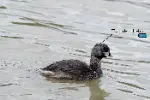
Podilymbus podiceps
The Pied-billed Grebe is a small, stocky waterbird belonging to the grebe family (Podicipedidae). It is widely distributed across the Americas, from Canada to southern South America, inhabiting freshwater lakes, ponds, and marshes.
Fun fact: The Pied-billed Grebe is often called a “water ghost” because it can sink quietly below the surface without leaving a ripple, vanishing from sight.
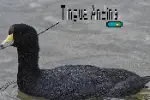
Fulica ardesiaca
The Slate-colored Coot is a medium to large waterbird of the rail family (Rallidae), found in high-altitude wetlands and lakes of the Andes, from Colombia to northern Chile and Argentina.
The Slate-colored Coot is a medium to large waterbird of the rail family (Rallidae), found in high-altitude wetlands and lakes of the Andes, from Colombia to northern Chile and Argentina.
PB
Phalacrocorax brasilianus
The Neotropic Cormorant is a familiar waterbird across the Americas, found from the southern United States through Central America and deep into South America. Recognizable by its dark plumage and yellow throat patch, it dives skillfully for fish and often perches on posts or ropes to dry its wings. Beyond its striking behavior, it plays an important role in maintaining healthy aquatic ecosystems throughout its wide range.
The Neotropic Cormorant is a familiar waterbird across the Americas, found from the southern United States through Central America and deep into South America. Recognizable by its dark plumage and yellow throat patch, it dives skillfully for fish and often perches on posts or ropes to dry its wings. Beyond its striking behavior, it plays an important role in maintaining healthy aquatic ecosystems throughout its wide range.
 Made by Testimonial